CRiCT

Full Menu

Project

CRiCT
CRiCT Introduction
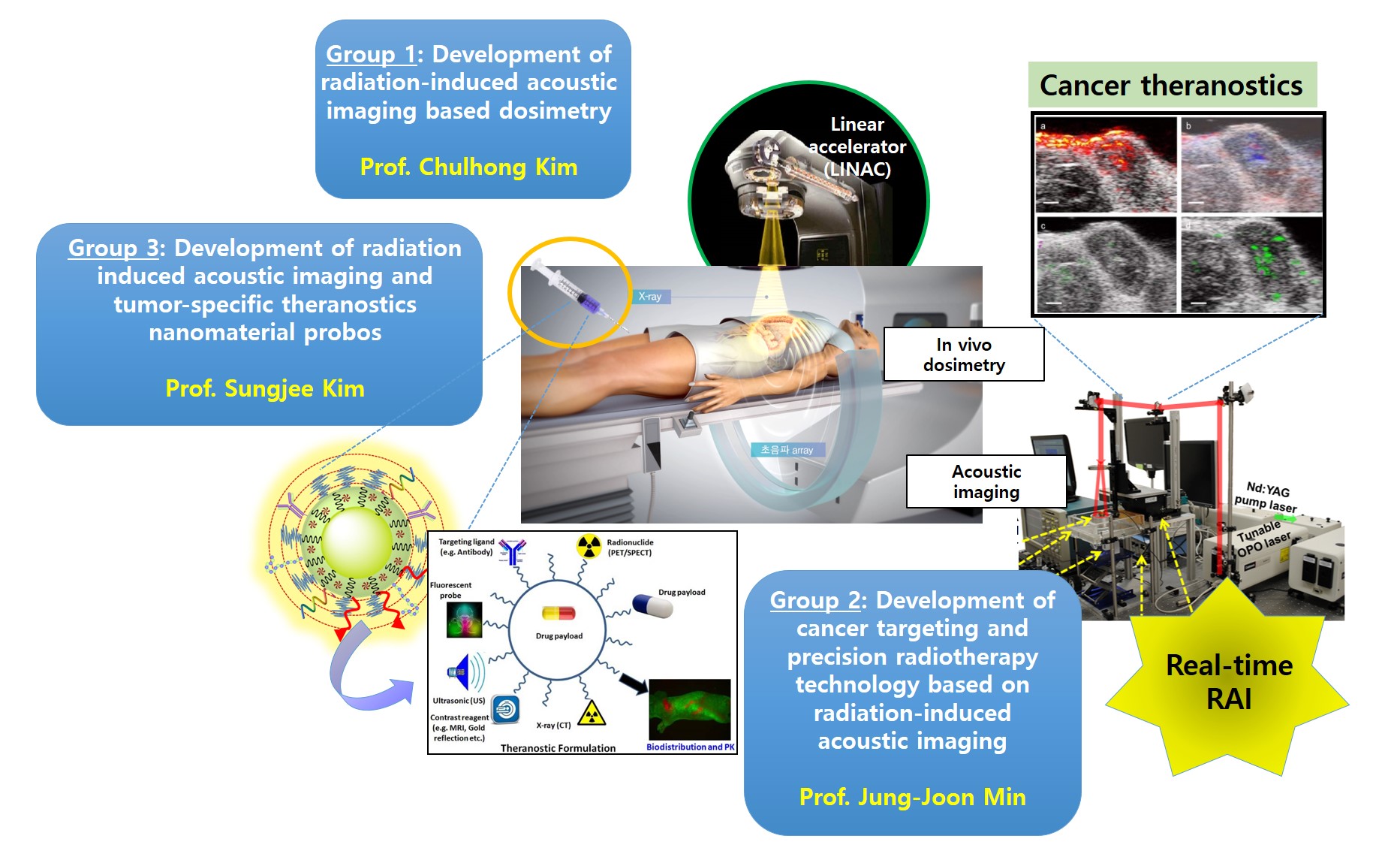
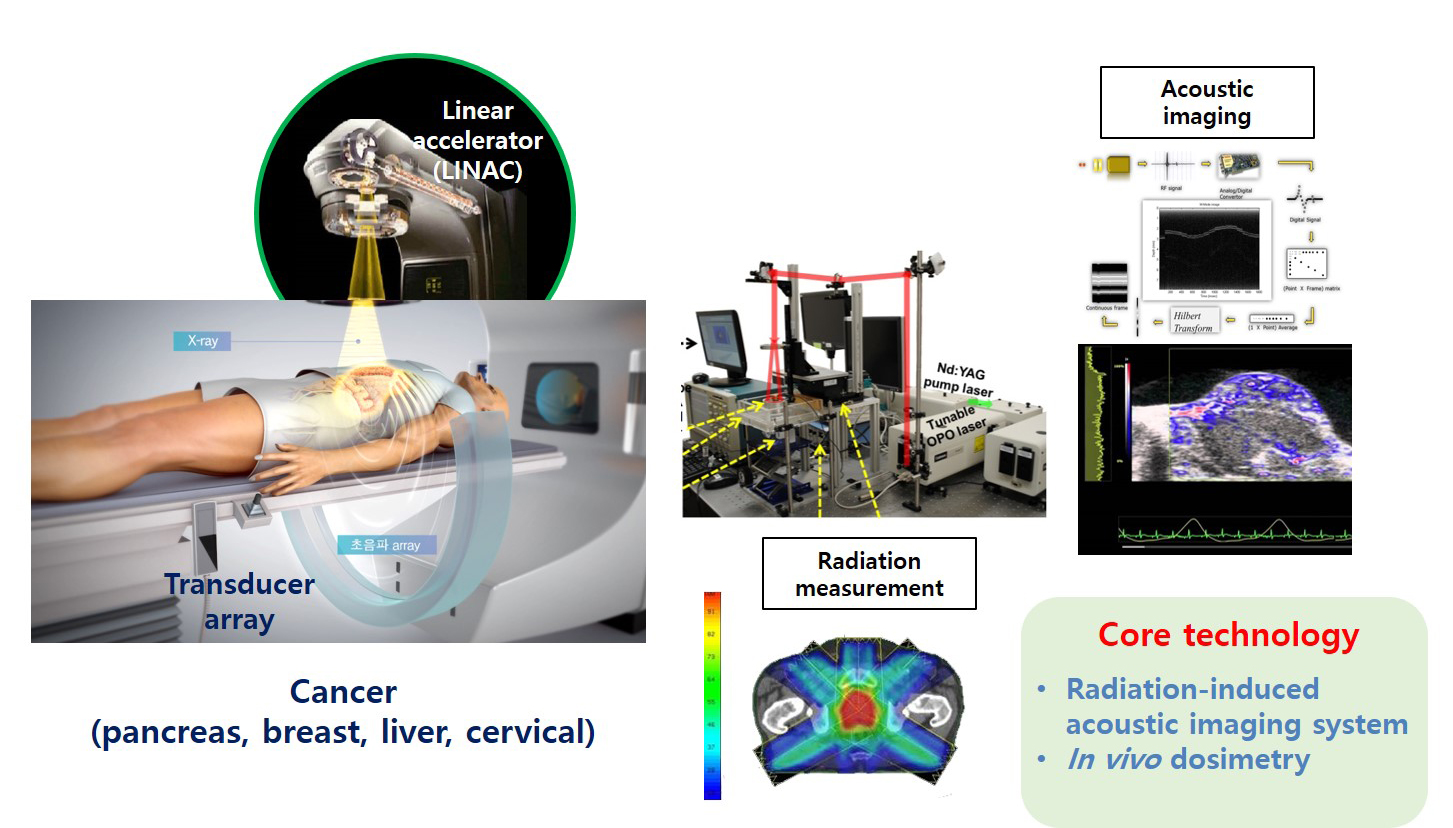
- Development of RAI technology that enables in vivo quantification of radiation absorption in tumor and subsequently enables in vivo dosimetry of RT
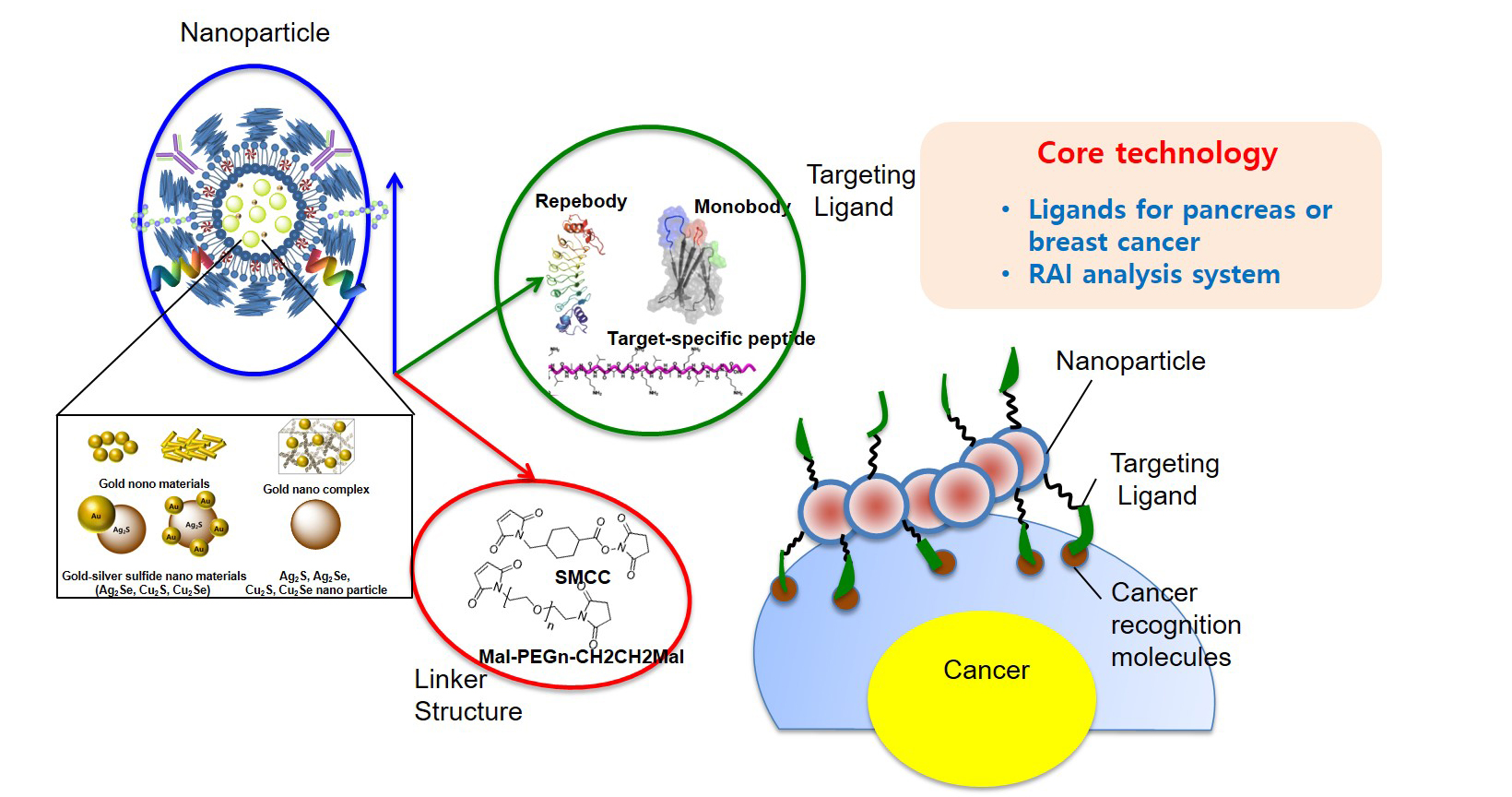
- Development of theranostic technology (simultaneously imaging and curing cancer) using nanocomplex designed to enhance RT effect. This technology includes development of probe for targeting breast cancer or pancreatic cancer, combining it with nanoparticle characterized by high radiation absorption coefficient and its surface modification to release therapeutic agents in response to RT
Mission & Vision
Mission
Vision
Organization
The purpose of our group is to develop radiation (X—ray) induced acoustic imaging (RAI) system to measure real-time X—ray dosimetry inside of live subjects in vivo and to monitor the radiation treatment. After injecting the radiation absorbing nanostructure and specific targeted biomarker in small mouse, we will sensitively and specifically image diseased areas and radiation dosimeter using developed RAI system in vivo. Further, we will quantify the acoustic wave generated by radiation absorption, and then we can quantify the mount of radiation in each treatment stage.
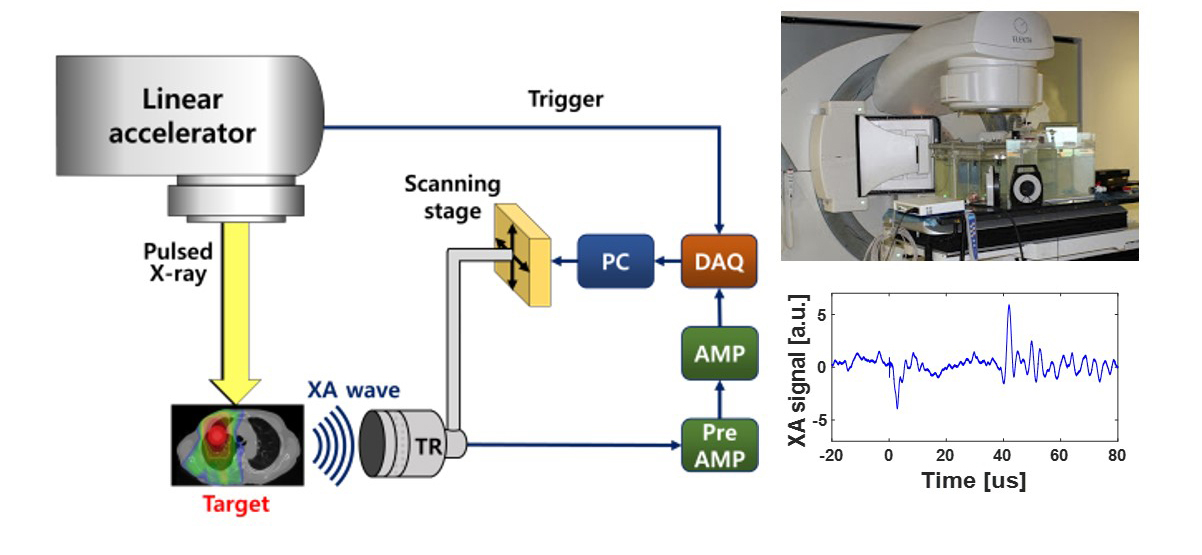
The purpose of our group is to develop an radiation-induced acoustic imaging (RAI) and targeted radiation absorption technology that can lead to personal in vivo dosimetry of radiotherapy and strengthening of radiotherapy efficacy. For that,
- Establishment of personal in vivo dosimetry algorithm through the energy conversion of pulsed X-ray generated by LINAC to acoustic signal
- Discovery and synthesis of a targeted ligand against molecular markers overexpressed in human pancreatic cancer and breast cancer
- Characterization and optimization of tumor-targeted ligand-based nanocomplex in terms of targeting efficiency, in vivo biodistribution, pharmacokinetics, pharmacodynamics and therapeutic efficacy
Personal in vivo dosimetry technology based on RAI
We intend to develop nanomaterials that have high radiation absorption coefficient for simultaneous diagnosis, dosimetry, and therapy based on pulsed x-ray radiation. The materials can respond tumor microenvironment and selectively absorb radiation. Absorbed radiation can be converted into heat. The heat generates acoustic signal due to thermal expansion. The acoustic signal can be used for ultrasound imaging. The heat can be also applied for hyperthermia and stimulate release of anticancer drug. Also, absorbed radiation can be generated the reactive oxygen species. This enables highly efficient anticancer therapy by combining chemotherapy, photodynamic therapy, and hyperthermia. This proposal aims studies necessary to translate the combination into practical applications. In this research, we will investigate therapy effects and mechanisms by studying change of the blood distribution and response of cells through the high performance imaging technique using radiation induced acoustic based nanoprobes and developing nanoprobes which are capable of simultaneous diagnosis and therapy.
Synthesis of novel radiation induced theranostic nano complex